Origins and formation
Pierre de Bérulle was born at the Château de Cérilly, in today’s Yonne department, near the village of Bérulle in today’s Aube department and the town of Aix-en-Othe. He studied with the Jesuits and at the University of Paris. While still young, he wrote a Discourse on Interior Self-Abnegation. He was ordained in 1599.
In 1600, Henry IV took notice of him during the public debate at Fontainebleau. Bérulle assisted Cardinal Du Perron in his discussions with Protestants, including Philippe de Mornay. In 1602, he met Francis de Sales.
Introduction of the Discalced Carmelites and the Oratory
In 1604, he brought to France the Discalced Carmelites, the reformed branch inspired by Saint Teresa of Ávila, independent of the older Carmelite order. With Barbe Acarie, he founded their first convent in the Faubourg Saint-Jacques.
Above all, he initiated the Society of the Oratory, founded in France on November 11, 1611, following the model of the Oratory established in Rome in 1575 by Saint Philip Neri. It was a community of priests living together, called to “strive courageously for the perfection of evangelical life,” without taking solemn vows, and serving the bishops.
In 18 years, Bérulle founded 60 Oratory houses and 40 Carmelite convents. French Oratorians thus took an active part in the reform of the clergy in the seventeenth century. The Jesuit Father Coton called the congregation “necessary for the Church,” while Saint Francis de Sales said he knew “nothing holier or more useful for the Church and for God.”
Cardinal and statesman
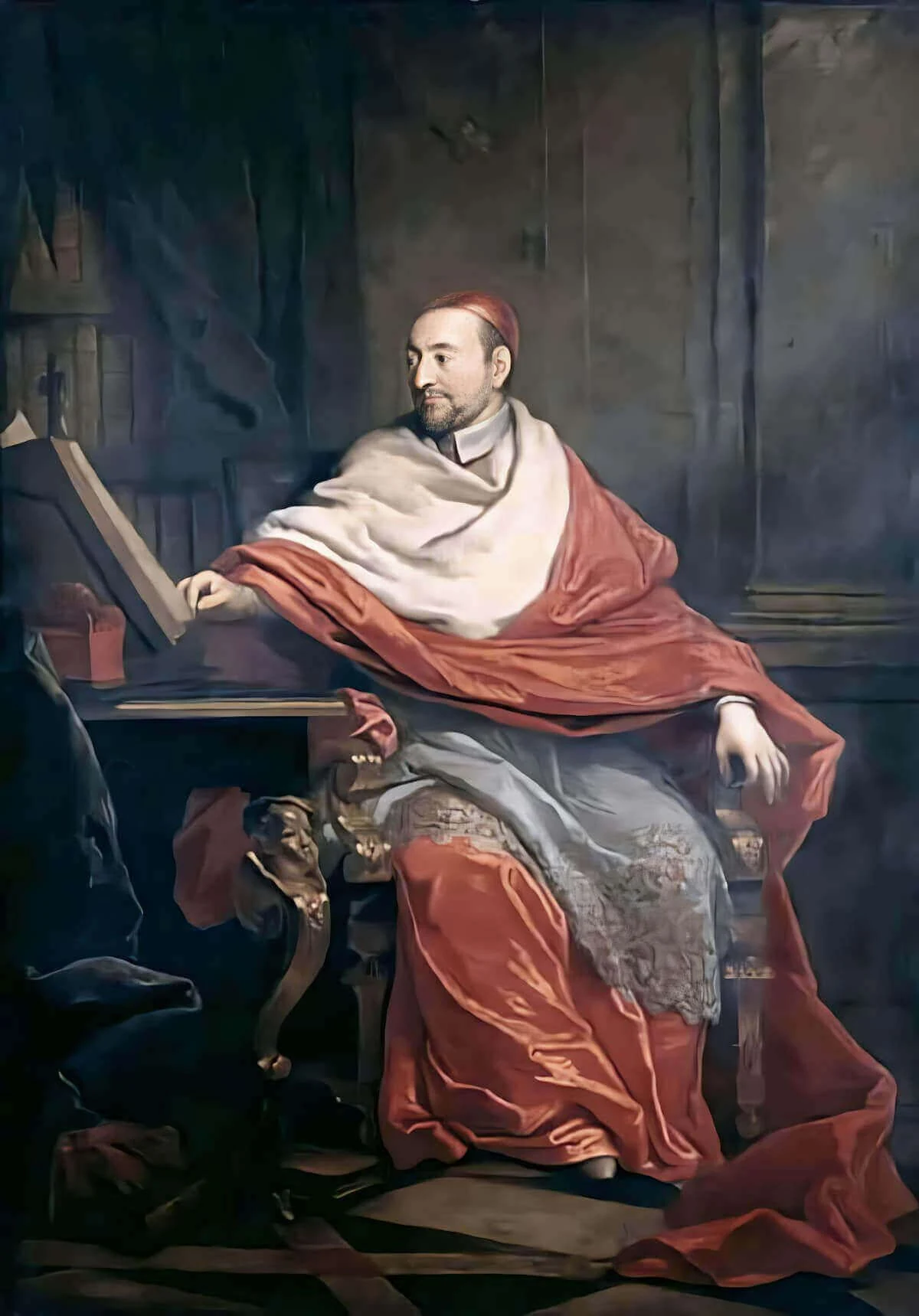
In 1625, Bérulle accompanied Henrietta Maria of France, daughter of Henry IV, to England for her marriage to Charles I, and served as her chaplain during the first year of her stay. In 1627, he was made a cardinal; he would have declined the honor had the Pope not expressly ordered him to accept it. Pope Urban VIII’s brief of November 8, 1627, called for the Society of Brittany to be affiliated with the Congregation of Saint-Maur. The papal nuncio in France was Bernardino Spada.
Bérulle also played an important political role as head of the council of the Queen Mother, Marie de’ Medici. As an influential member of the dévot party, he incurred Cardinal Richelieu’s hostility. After reconciling Louis XIII with his mother, Bérulle was appointed a counsellor of state. His pro-Austrian policy, however, opposed Richelieu’s, who soon removed him from power. The dévot party disappeared after the Day of the Dupes in 1630.
At a conference held at the papal nuncio Guidi di Bagno’s residence in November 1627, Pierre de Bérulle urged Descartes, as a matter of conscience, to contribute to the reform of philosophy and to apologetics.
Source: Wikipedia
Spirituality
By Huguette Caron, r.e.j., January 26, 1993
Paul Cochois begins his writings on Bérulle and the French School with these words: “Without Bérulle, something essential would be missing from the spiritual life of France and from Christian thought.” Bérulle was a priest in the fullest sense and also a mystic. Alongside his many other responsibilities, he established 43 Carmelite convents and 41 Oratory houses in France during the first half of the seventeenth century. As Paul Cochois also tells us, this is hardly surprising: Bérulle had one passion—to reveal to souls the unfathomable riches of the mystery of the Incarnate Word, so that they might live from it.
In Le Point théologique, Fernando Guillén Preckler compares Bérulle to John the Baptist. In effect, he writes: Like a new John the Baptist, Bérulle, apostle of the Incarnate Word, points him out and makes his mysteries, actions, words, miracles, sufferings, person, states, and greatness known to the world. He leads people to revere, serve, adore, and love Christ, so that the living image of Christ’s life may be formed in us.
Paul Cochois begins his writings on Bérulle and the French School with these words: “Without Bérulle, something essential would be missing from the spiritual life of France and from Christian thought.” Bérulle was a priest in the fullest sense and also a mystic. Alongside his many other responsibilities, he established 43 Carmelite convents and 41 Oratory houses in France during the first half of the seventeenth century. As Paul Cochois also tells us, this is hardly surprising: Bérulle had one passion—to reveal to souls the unfathomable riches of the mystery of the Incarnate Word, so that they might live from it.
In Le Point théologique, Fernando Guillén Preckler compares Bérulle to John the Baptist. In effect, he writes: Like a new John the Baptist, Bérulle, apostle of the Incarnate Word, points him out and makes his mysteries, actions, words, miracles, sufferings, person, states, and greatness known to the world. He leads people to revere, serve, adore, and love Christ, so that the living image of Christ’s life may be formed in us.
Father Guillén Preckler further writes in État chez le Cardinal de Bérulle that Bérulle deserves recognition as the person who introduced the “way of spiritual childhood” in France, a way that the young Thérèse would later teach to the world.
Bérulle teaches that God can be contemplated only through the mystery of the Incarnate Word. If Christ is the teacher of our knowledge and life, meditation on his mysteries is the richest source of prayer. Jesus is the true Sun, toward whom the soil of our hearts must continually turn... Sulpician Father Pourrat notes that Bérulle’s devotion to Christ has a distinctive character: it is directed not primarily to Jesus’ humanity, but to Jesus in his entirety.
Henri Bremond called Bérulle one of the greatest contemplatives ever known to the Church. Louis Cognet adds that Bérulle’s vision is essentially a mysticism of the whole Christian life. The great fruit of this contemplation is adherence to God: a mystical union between the Saviour and the faithful, a life-giving flow from head to member, and a sharing of Jesus’ dispositions and virtues with the disciple. It is a gift from God and also a free movement of the soul.
These insights are enough to nourish respect, reverence, and love for Bérulle, a pure source of the French School of spirituality. As G. Pelle writes in Le mystère de la sainteté du Christ selon le Cardinal de Bérulle, this school “delights first in contemplating the wonders of divine life in the soul of Jesus.” It celebrates this inner life and considers how the divine life of grace flows from Christ, the head, to the members of his mystical body, and how the faithful make Christ’s states their own.
Source: Huguette Caron, r.e.j., January 26, 1993
Some features of Bérulle’s theocentrism
Theocentrism
In an age that exalted human greatness and glory, Bérulle sought to put God and religion back at the centre of life.
This meant displacing humanity, which had made itself the centre of the universe and judged everything, even God, in relation to itself. Bérulle’s theocentrism instead defines humanity in relation to God and sets the world right.
Bérulle’s fervour
What Bérulle returns to tirelessly, what he never finishes saying and what continually rekindles his fervour, is neither fear of hell, the desire for perfection, nor love of neighbour.
It is the discovery of God. God’s greatness is a compelling truth on which he continually reflects and by which he lives. Reverence for God does not limit love of God; it expresses love’s delicacy.
Bérulle’s gaze
Bérulle understands that someone who looks at their feet may avoid stumbling but risks losing their way. A person whose eyes are fixed on the horizon will move more directly toward the goal. Likewise, in the interior life one may focus on immediate aims or contemplate the ultimate end. Bérulle does not look down at his feet; he raises his gaze high. His thought goes straight to the Lord as its centre. He himself writes: «“We must first look to God and not to ourselves, and act not from self-regard and self-seeking, but from the pure vision of God.”»
Reverence for God
Reverence for God does not limit love of God; it expresses love’s delicacy. The greatness of God’s majesty can never be separated from the greatness of his goodness.
Humanity, “the high priest of creation”
Contemplating visible nature can make us worshippers of the Invisible, who brought all things from nothing by his almighty power. When people glorify God on behalf of all that exists, they become “high priests of creation.”
Adoration
“Adoration is an impulse of the heart, loving and enthusiastic, alive with wonder; it fills the soul with an unshakeable joy: to know that the One it loves is so great!”
For Bérulle, adoration becomes love, a love in awe of God’s infinite perfection. The delicacy of this love inspires reverence and respect.
For Bérulle, adoration is not limited to particular acts; it tends toward becoming a “permanent state.”
Jesus, the perfect worshipper
Bérulle says, in effect: In Jesus Christ we have the “completion” of our adoration, the “perfect worshipper,” truly devoted by his very state. His infinite praise can become ours. We are called to “adhere” to it, “share in it,” and offer it to the Father.
The love of God
For Bérulle, love of God is not natural: the ability to love God is too great a gift to be attributed to nature.
Source: Huguette Caron, r.e.j., January 26, 1993
Source: Croire.com official channel
A man for his fellow human beings
Since you deign to give us such a great share in your greatness and in the secret of your love, in so great a work, let us take part with you. Let us enter into your plans, your concerns, and your feelings; let us be wholly yours, and wholly yours for ever.
Pierre de Bérulle
From Bérulle to John Eudes
Bérulle’s teaching harmoniously joins tenderness with seriousness, theology with devotion, doctrine with poetry, and simplicity with grandeur; it renewed devotion to the Virgin Mary. In Bérulle’s writings, readers will find the foundations of Marian devotion, rooted in the grace of the Incarnation, which reveals to us not the Son of God alone, but the Son of God with his mother.
The greatness of the French School of spirituality lies not in breaking the current of humanism, but in channeling it within Christian banks. Bérulle remains the pivot of its thought; Condren adds his fervour, Olier his ordered wisdom and gift of expression, and John Eudes the accents of his zeal.
Huguette Caron, r.e.j.,
Death and legacy
Pierre de Bérulle died suddenly while celebrating Mass on October 2, 1629, at the age of 54. Since 1955, he has been buried in the chapel of the Oratorian College of Juilly beside Charles de Condren, his successor and the college’s founder.
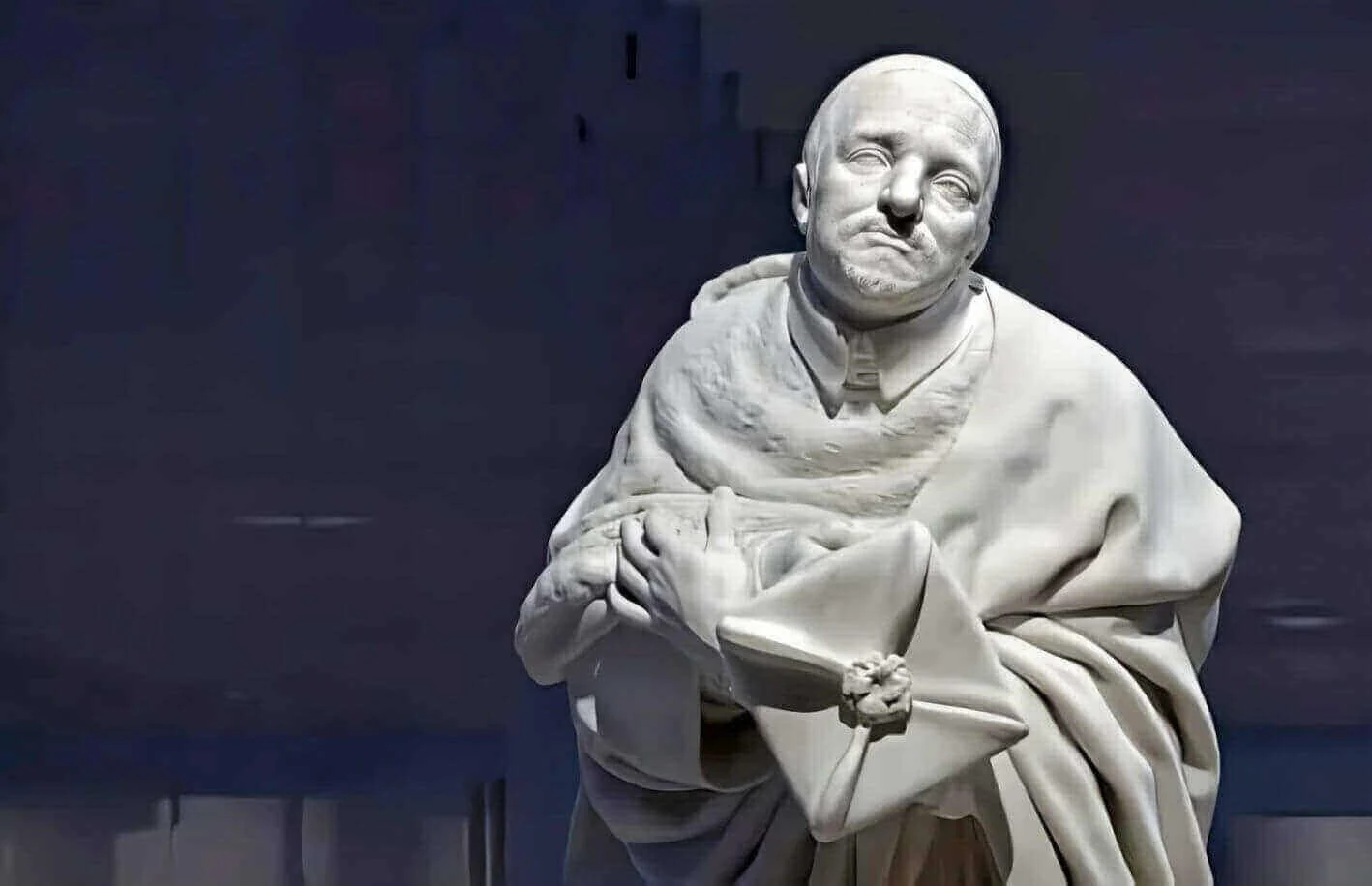
A bust commemorating him, bearing an inscription and his coat of arms, stands today in the ambulatory of Saint-Eustache Church in Paris.
Source : Pierre de Bérulle · eudistes.org